
Suzuki GSX-R 1000 Owners Manual: Ignition switch
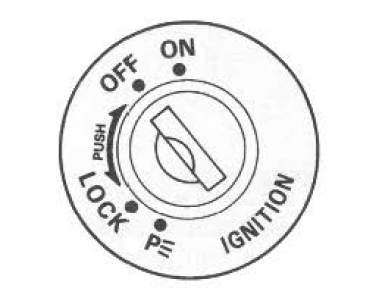
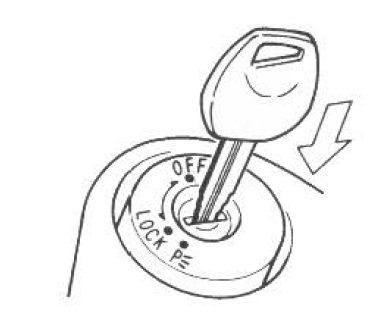
The ignitionr switch has 4 positions:
"Off" position
All electrical circuits are cut off.
The engine will not start. The key can be removed.
"On" position
The ignition circuit is completed and the engine can run. The headlight and taillight will automatically turn on. The key cannot be removed in this position.
Note
: start the engine promptly after turning the key to the "on" position, or the battery will lose power due to consumption by the headlight and taillight.
"Lock" position
All electrical circuits are off. The key can be removed and the steering will be locked. Turn the steering all the way to the left and push down the key and turn it to the "lock" position.
"P" (parking) position
Taillight will come on to increase visibility for temporary road side parking at night. The key can be removed and the steering will be locked.
 Warning Warning
Moving the motorcycle while the steering is locked can be hazardous. You could lose your balance and fall, or you could drop the motorcycle. Stop the motorcycle and place it on the side stand before locking the steering. Never attempt to move the motorcycle when the steering is locked. |
Note
: the key hole can be covered by turning the lid for antitheft purpose.
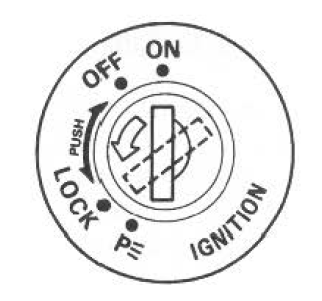
Turn the ignition switch to "lock" position and change the lid hole position when leaving your motorcycle.
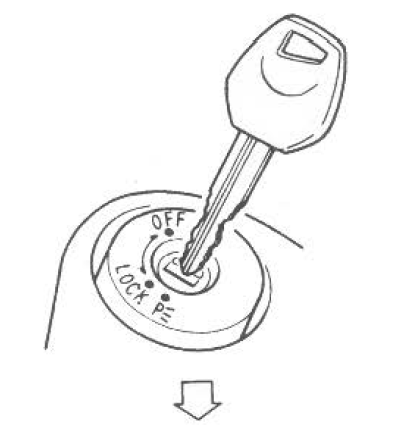
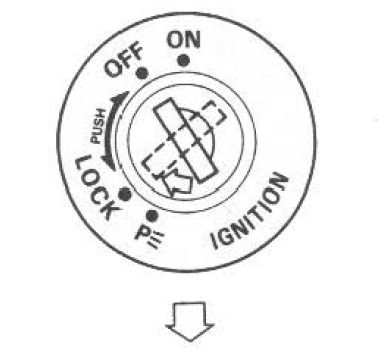
Align the lid hole position with the key hole position when inserting the key.
 Key
Key
Two keys come with this motorcycle.
Keep the spare key in a safe
place. An identifying number is
stamped on the plate. Use this
number when making a replacement
key.
Please write down yo ...
 Instrument panel
The fuel indicator light 8,12,13
Lcd's and tachometer needle
work as follows to confirm their
function when the ignition switch
is turned to the "on" position.
The fuel indicator ...
Other materials:
Lubrication points
Proper lubrication is important for
smooth operation and long life of
each working part of your motorcycle
and also for safe riding. It is
a good practice to lubricate the
motorcycle after a long rough ride
and after getting it wet it in the
rain or after washing it. Major
lubrication points ...
Specifications
Tightening torque specifications
Note
the specified tightening torque is described in the following.
“Body frame construction” “front footrest bracket construction”
“side-stand construction”
Reference: for the tightening torque of fastener not specified in this ...
Rear turn signal light bulb replacement
Caution
when you touch the bulb with your bare
hands, clean the bulb with a cloth moistened
with alcohol or soap water to prevent
premature bulb failure.
Remove the rear turn signal light lens (1).
Replace the bulb (2).
Reinstall the removed parts
...