
Suzuki GSX-R 1000 Service Manual: Schematic and routing diagram
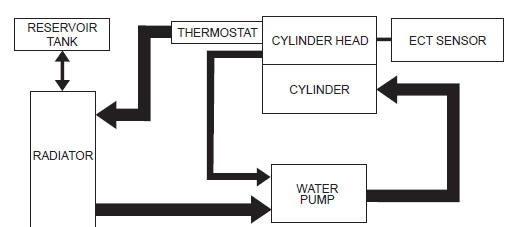
Cooling circuit diagram
Water hose routing diagram
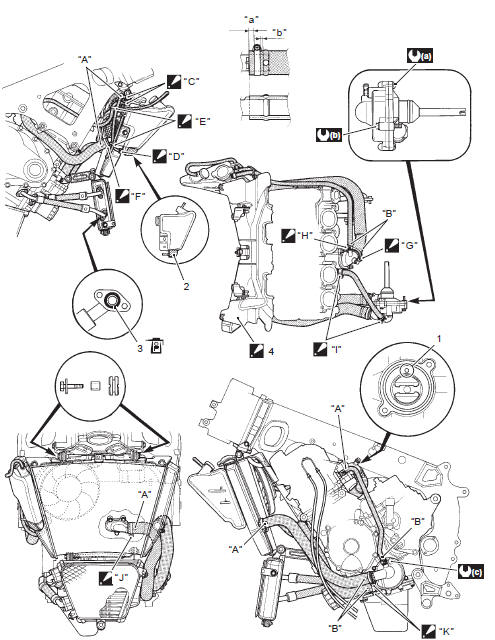
|
 Yellow
 White
White
 Clamp end
 Clamp end
 Cut off the
 Screw head
 Screw head
 Clamp end
 Clamp end
 Screw head
 Screw head
 6
6
 10 N·m
 13 N·m
 Apply engine oil.
 General description
Engine coolant description
Caution
use a high quality ethylene glycol base
anti-freeze, mixed with distilled water. Do
not mix an alcohol base anti-freeze and
different b ...
 Diagnostic information and procedures
Engine cooling symptom diagnosis
...
Other materials:
Tp reset
When replacing the throttle body assembly or tp sensor
with a new one or reinstalling the tp sensor, reset the
tp learned value in the following procedures:
Note
keep the throttle valves fully closed while
resetting the tp learned value.
Turn the ignition switch on.
...
Specifications
Service data
Clutch
unit: mm (in)
Tightening torque specifications
Note
the specified tightening torque is described in the following.
“Clutch control system components” “clutch components”
Reference: for the tightening torque of fastener not specified in this ...
Wheel balance check and adjustment
Check and adjust the wheel balance in the following
procedures:
removal the wheel assembly. Refer to “front wheel assembly removal and
installation” and “rear wheel assembly removal and installation” .
Remove the mounting drum from the rear wheel.
(For rear wheel) ref ...